Causes and Types of Urine Incontinence Sutton in Ashfield.
An overview of the impact and prevalence of urine incontinence. Its causes include temporary and chronic factors. The different types of incontinence are stress, urge, and overflow. With information on diagnosis and treatment options. Risk factors, prevention, and the impact on quality of life.

Overview of Urine Incontinence Sutton in Ashfield
Urine incontinence is known as urinary incontinence. It is a prevalent condition. Characterised by the involuntary leakage of urine. Impacting individuals across different age groups and genders.
The condition can range from occasional leaks. To a sudden, strong urge to urinate. Affecting the quality of life for those affected. It is worth noting that although urine incontinence is a common issue, it affects both men and women.
LA-EMS vs Surgical options for Urine Incontinence treatment
| Feature / Factor | LA-EMS (Non-Surgical Chair Treatment) | Surgical Options (e.g. Sling, Colposuspension, Bulking) |
|---|---|---|
| Invasiveness | Completely non-invasive — patient sits fully clothed in a specialised chair while electromagnetic energy stimulates pelvic floor muscles. | Invasive — requires incisions or internal implants (e.g. slings or mesh) or injections (bulking agents). |
| Anaesthesia | None. | Local or general anaesthesia is typically required depending on the procedure. |
| Downtime / Recovery | No downtime — most people resume normal activities immediately. | Recovery time ranges from days to weeks; some procedures are day-case but activity restrictions usually apply. |
| Comfort during procedure | Painless or mild tingling/strong pelvic contractions while sitting (well tolerated by most patients). | Surgical discomfort/pain post-op; may require analgesia and temporary catheterisation in some cases. |
| Typical session / procedure time | ~25–30 minutes per session; session packages commonly involve multiple sessions (see next row). | Operation time varies (about 30 minutes to a few hours depending on procedure) plus hospital time and recovery. |
| Number of treatments | Typically a course of multiple short sessions (commonly 6 sessions over a few weeks; some protocols use 6–8 sessions). * | Usually a single surgical procedure; some patients later require revision or additional procedures. |
| Risk of complications | Very low — no surgical risks such as bleeding or implant exposure; side effects are generally mild and temporary. | Higher risk profile: infection, bleeding, implant/mesh complications, urinary retention, and (rarely) organ injury or need for reoperation. |
| Effectiveness | Clinically shown to improve pelvic floor strength and reduce urinary leakage for many patients — best for mild-to-moderate incontinence or for those seeking non-surgical options. | Surgical options (e.g. mid-urethral sling) have strong long-term continence rates for appropriate candidates but effectiveness can decline and some require revision. |
| Suitability | Suitable for many patients including those who prefer to avoid surgery or are not candidates for anaesthesia. | May be more appropriate for moderate–severe stress urinary incontinence or where conservative treatments failed; not suitable for everyone (surgical risk factors apply). |
| Long-term maintenance | Maintenance sessions may be recommended periodically to sustain results. | Surgical results can be long-lasting but some patients need reoperation or face long-term complications (e.g. mesh exposure in a small percentage). |
Notes: The best option depends on the individual — severity/type of incontinence, overall health, prior treatments, and personal preference. Always discuss risks and benefits with a qualified clinician.
A woman who has given birth may experience stress incontinence due to the weakening of the pelvic floor muscles during childbirth. It can lead to leakage when coughing, sneezing, or engaging in physical activities. On the other hand, an older adult may experience urge incontinence, which causes a sudden and intense need to urinate—leading to involuntary leakage, impacting their daily activities.
The impact of urine incontinence on an individual’s life can be substantial, affecting their emotional well-being, social interactions, and overall quality of life.
Understanding the causes, types, diagnosis, and treatment options. Prevention and management strategies for urine incontinence. It is crucial for affected individuals.
Understanding Urine Incontinence Sutton in Ashfield
Urine incontinence is defined as the involuntary leakage of urine, and it can have various manifestations, from minor leaks to a strong and sudden urge to urinate.
This condition can be a short-term issue, such as during pregnancy or urinary tract infections, or it can be a long-term symptom of chronic conditions like pelvic floor disorders, stroke, diabetes, and hormonal changes.
The impact of urine incontinence on an individual’s life can be significant, affecting their daily activities and emotional well-being.
It’s important to understand that urine incontinence is not a condition limited to older adults, as it can also affect younger individuals.
For instance, young women may experience urine incontinence during pregnancy due to the pressure exerted on the bladder by the growing fetus.
Likewise, individuals with certain neurological conditions may also experience urine incontinence, highlighting the diverse nature of this condition.
Causes of Urine Incontinence Sutton in Ashfield
The causes of urine incontinence are diverse, encompassing both temporary and chronic factors.
Temporary causes may include urinary tract infections, pregnancy, or certain medications, while chronic causes involve pelvic floor disorders, stroke, diabetes, and hormonal changes.
Various factors contribute to urine incontinence, including alcohol, caffeine, medications, urinary tract infections, constipation, pregnancy, childbirth, ageing, and neurological disorders.
For example, certain medications such as diuretics, antihypertensives, sedatives, and muscle relaxants can disrupt the normal process of storing and passing urine, leading to incontinence.
Additionally, neurological disorders such as multiple sclerosis or Parkinson’s disease can affect the nerve signals involved in bladder control, contributing to urine incontinence.

Types of Urine Incontinence Sutton in Ashfield
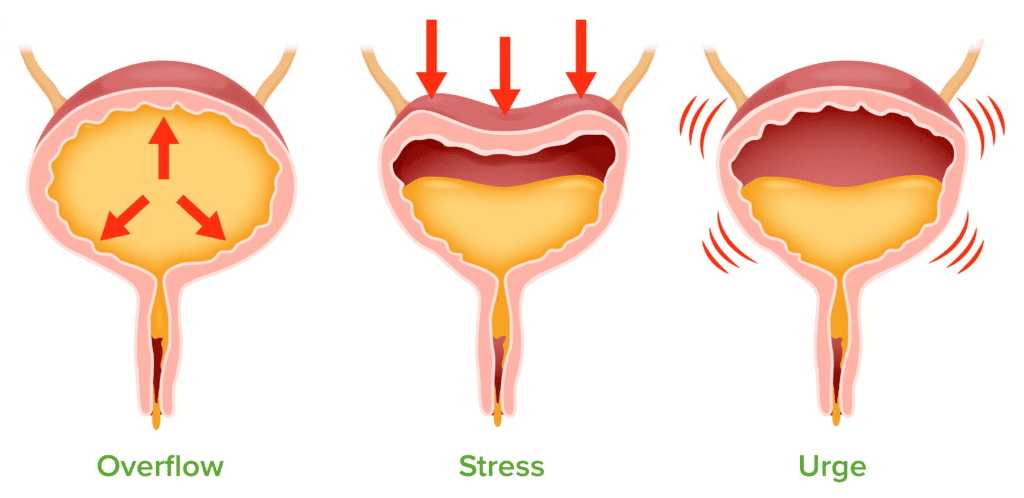
There are different types of urine incontinence, each with its own distinct causes and characteristics.
Stress incontinence is caused by weak or damaged pelvic floor muscles or a damaged urethral sphincter, leading to leakage during physical activities such as coughing, sneezing, or exercising.
Urge incontinence, on the other hand, is caused by a problem with the detrusor muscles in the bladder, resulting in a sudden and intense need to urinate, often leading to leakage.
Furthermore, overflow incontinence is caused by a blockage or obstruction affecting the bladder, such as an enlarged prostate gland or bladder stones, leading to constant or frequent dribbling of urine.
For instance, an individual experiencing stress incontinence may leak urine when performing activities that exert pressure on the bladder, such as lifting heavy objects or engaging in intense physical exercise.
Conversely, someone with urge incontinence may experience a sudden and overwhelming need to urinate, sometimes leading to involuntary leakage, even if the bladder is not full.
Diagnosis of Urine Incontinence Sutton in Ashfield
The diagnosis of urine incontinence involves various medical assessments and tests aimed at identifying the underlying cause and type of incontinence.
Physical exams, urine samples, ultrasounds, stress tests, cystoscopy, and urodynamic testing play a crucial role in diagnosing this condition.
Additionally, urinalysis, blood tests, and various imaging tests are utilised to aid in the diagnosis of urine incontinence.
For example, during a physical exam, a healthcare provider may assess the strength of the pelvic floor muscles and evaluate any signs of prolapse. At the same time, a urine sample can help identify the presence of any urinary tract infections or abnormalities.
Furthermore, urodynamic testing, which assesses the bladder’s ability to store and empty urine, can provide valuable insights into the underlying causes of urine incontinence.
Treatment Options for Urine Incontinence Sutton in Ashfield
The treatment of urine incontinence encompasses a range of approaches, including medications, lifestyle modifications, and, in some cases, surgical interventions.
Medications such as oxybutynin, tolterodine, and mirabegron are commonly prescribed to manage symptoms of incontinence, aiming to reduce the urgency and frequency of urination.
Additionally, lifestyle changes such as bladder training, Kegel exercises to strengthen the pelvic floor muscles, and dietary adjustments can also help manage urine incontinence.
Furthermore, other treatment options involve pelvic floor exercises, biofeedback, electrical stimulation, medical devices such as pessaries, and, in some cases, surgery to repair or support the bladder, urethra, or pelvic floor.
Individuals need to work closely with healthcare providers to determine the most suitable treatment approach based on the type and severity of their urine incontinence.
FAQs: Urine Incontinence & LA-EMS Incontinence Treatment
1. What is the LA-EMS Incontinence Treatment, and how does it differ from other non-surgical treatments?
LA-EMS Incontinence Treatment is a non-invasive electromagnetic chair treatment designed to stimulate the pelvic floor muscles through high-intensity focused electromagnetic (HIFEM) energy. Unlike Kegel exercises, which require self-conscious effort, LA-EMS Incontinence Treatment contracts pelvic floor muscles rapidly and repeatedly while you are fully clothed, without requiring surgery or implants. It complements or offers an alternative to conservative measures, especially when these are insufficient.
2. Am I a suitable candidate for LA-EMS Incontinence Treatment?
Ideal candidates are those experiencing mild to moderate urinary incontinence (stress, urge or mixed types), mainly when other conservative treatments (pelvic floor exercises, lifestyle changes) have not achieved satisfactory results. You should not be pregnant, have an active urinary tract infection, or have certain medical implants (like pacemakers) that may be contraindicated. A consultation is required to assess medical history, type/severity of incontinence, and overall health.
3. How many LA-EMS Incontinence Treatment sessions are needed, and how long does each last?
Typically, patients undergo around six sessions, often spaced out over several weeks (e.g. one or two sessions per week). Each session lasts roughly 25-30 minutes, during which you will feel pelvic floor muscle contractions induced by the device. After the initial course, maintenance treatments may be recommended to sustain results.
4. What results can I realistically expect from LA-EMS Incontinence Treatment?
Many people report substantial improvements in urinary leakage, stronger pelvic floor control, fewer episodes of urgency or frequency, and an improved quality of life. However, results vary depending on the type and severity of incontinence, underlying causes, age and compliance with recommended follow-up or maintenance. LA-EMS Incontinence Treatment tends to work best when part of a holistic plan, including lifestyle adjustments.
5. Is there any recovery time or downtime after LA-EMS Incontinence Treatment?
No surgery means there is essentially no downtime. Most people can resume normal daily activities immediately after each session. There may be mild sensations (tingling, temporary muscle soreness) in the pelvic area, but these are generally mild and short-lived.
6. Are there any side effects or risks with LA-EMS Incontinence Treatment?
Side effects are uncommon and typically mild. Possible temporary effects include discomfort during or after treatment, mild pelvic muscle soreness, or slight urinary urgency. Serious complications are infrequent. Always disclose full medical history to your clinician to ensure safety (e.g., existing implants, neurological disorders).
7. How long do the effects of LA-EMS Incontinence Treatment last, and is maintenance required?
Results are not permanent in all cases. Many patients maintain improvement for several months after their course of treatment; periodic maintenance sessions (for example, every 3-6 months) may be needed for sustained benefit. Lifestyle measures (weight management, pelvic floor exercises, and avoiding bladder irritants) also help prolong results.
8. How does LA-EMS Incontinence Treatment compare with surgical options?
- Invasiveness: LA-EMS Incontinence Treatment is non-invasive; surgical options (slings, bulking agents, colposuspension, etc.) require incisions or implantation.
- Anaesthesia: None is needed for LA-EMS Incontinence Treatment; surgery often requires general or regional anaesthesia.
- Downtime and recovery: It has no recovery period; surgery has a longer recovery and risk of post-operative pain, limited activity, and possibly a hospital stay.
- Risk profile: Lower risk with LA-EMS Incontinence Treatment; surgical options carry risks such as infection, complications from implants, bleeding, etc.
- Effectiveness: Surgery can achieve higher rates of long-term continence, especially in more severe cases, but also carries a higher risk. LA-EMS Incontinence Treatment offers a less invasive alternative with fewer side effects, making it potentially suitable for mild to moderate cases or for patients who prefer not to undergo surgery.
9. Will LA-EMS Incontinence Treatment treat all types of urinary incontinence (stress, urge, overflow)?
LA-EMS Incontinence Treatment is most effective for stress and urge incontinence. It can help with mixed incontinence (a combination of stress and urge). Overflow incontinence (often due to obstruction or nerve damage) may require different or additional treatments (e.g. addressing the obstruction). During your consultation, your clinician will determine if LA-EMS Incontinence Treatment alone is sufficient or if combined treatments are needed.
10. How much does LA-EMS Incontinence Treatment cost, and is it covered by insurance or the NHS?
The cost depends on the clinic, the number of sessions included in the package, and the geographic location. LA-EMS Incontinence Treatment is generally considered elective or aesthetic/functional rather than emergency medical treatment, so insurance or NHS coverage may be limited or not available. LA-LIPO will have its pricing schedule; it’s best to discuss cost during consultation and check with your insurance provider if they cover parts of therapy.

Prevention and Management of Urine Incontinence Sutton in Ashfield
Preventive measures and lifestyle changes are crucial in managing urinary incontinence. Maintaining a healthy weight, performing pelvic floor exercises, and avoiding bladder irritants such as caffeine and alcohol are essential steps. It’s also important to consume a diet rich in fibre and to quit smoking.
Furthermore, various resources and products are available to assist in the prevention and management of urinary incontinence, providing support to those affected by this condition.
A preventive measure for urinary incontinence is to maintain a healthy weight through regular physical activity and a balanced diet. This can help alleviate pressure on the bladder and pelvic floor muscles.
Additionally, having access to resources and products such as absorbent pads, protective undergarments, and bladder support devices can offer practical support in managing urinary incontinence. These measures can significantly improve the overall quality of life for those affected.
Impact of Urine Incontinence on Quality of Life
The impact of urine incontinence on an individual’s quality of life can be substantial, affecting their emotional well-being, social interactions, and overall daily activities.
Affected individuals need to seek medical advice and support from healthcare providers to effectively manage this condition and improve their overall quality of life.
Furthermore, the emotional and psychological impact of urine incontinence should not be overlooked, as affected individuals may experience feelings of embarrassment, social isolation, and a reduced quality of life.
Therefore, healthcare providers play a crucial role in offering support, guidance, and appropriate treatment options to address the holistic impact of urine incontinence on affected individuals.
For Further Information, Call Us On 03300 100 238